


877-930-7667

service@scoopsoldiers.com

Most dog owners have been there: you spot the pile in the corner of the yard, tell yourself you'll grab it later, and then later keeps getting pushed back. It's an easy habit to fall into when life gets busy. But what's actually happening in that yard while the waste sits there is a lot more serious than most people realize. Dog poop is a real health hazard that builds up quietly over time, damaging your lawn and putting your family at risk. If you're ready to stop managing the problem yourself, our pet waste removal service is built to handle it reliably, on a schedule that works for you.
There's a common assumption that dog poop works like fertilizer and naturally breaks down into something harmless or even beneficial for grass. That assumption is wrong, and it's one of the most widespread misconceptions in pet ownership. Unlike cow manure, dog poop is not nutrient-rich compost. Dogs eat a high-protein diet, and what results is highly acidic and loaded with harmful bacteria and parasites that don't simply disappear when left outside.
When waste sits on your lawn, it breaks down slowly but not cleanly. Rainwater moves the bacteria and parasites through your soil, into runoff channels, and eventually into local waterways. Meanwhile, the acidity kills the grass beneath it, leaving those familiar brown, dead patches that don't recover easily. What looks like a minor mess is quietly doing real damage.
Before you even think about bacteria or soil contamination, the immediate sensory problems tend to be the first wake-up call. A yard without consistent cleanup becomes noticeably unpleasant fast, especially during warmer months. The smell intensifies as waste decomposes in the heat, and it doesn't stay confined to one corner of your yard. It drifts onto your deck, through open windows, and into spaces where you're trying to relax.
Beyond the odor, accumulated waste attracts flies at a significant rate. Flies breed in organic matter, and a neglected yard gives them a steady, welcoming environment. Those same flies then land on surfaces around your home, depositing bacteria wherever they go. Rodents are another problem. Rats and mice are drawn to fecal matter, and a yard with a buildup of dog poop can inadvertently invite a rodent problem that makes everything worse. What starts as skipped cleanup sessions can quietly turn into a pest management situation.
The inconvenience of pests and odor is frustrating, but the health risks buried in your lawn deserve the most serious attention. Dog poop carries a range of pathogens capable of causing real illness in both humans and other animals. The risks aren't theoretical, and they aren't limited to households with young children or immunocompromised individuals, though those groups face a higher level of exposure.
Zoonotic diseases are illnesses that can transfer from animals to humans, and dog poop is a documented transmission route for several of them. Campylobacter is one example, a bacterial infection that causes gastroenteritis, including diarrhea and fever, in humans and spreads via food, water, or the fecal-oral route. Salmonella is another widely recognized pathogen found in dog poop that can cause severe gastrointestinal illness. E. coli also lives in dog feces at concentrations capable of causing illness. These aren't rare, obscure conditions. They're real infections that can travel from your yard to your home on the bottom of a shoe, a child's hands, or a pet's paws.
Parasites present a separate and persistent concern. Toxocara canis (roundworms), hookworms, Giardia, and Cryptosporidium can be shed through infected dog poop and survive in soil for extended periods. Toxocara canis is particularly resilient and can remain viable in soil long after the visible waste has decomposed. Human infection, known as toxocariasis, can cause serious symptoms including organ inflammation and, in severe cases, vision problems. Giardia spreads easily through contaminated soil and water and can infect both animals and some humans, though the type of Giardia found in dogs and cats is usually not the same type that makes people sick.
These pathogens don't stay neatly contained in one spot. They move through soil with rain, get picked up on surfaces, and transfer to hands and mouths more easily than most people anticipate.
Children are particularly vulnerable because of how they interact with outdoor spaces. They play on grass, touch the ground, and put their hands near their faces without thinking twice. A yard with unmanaged waste puts kids in direct, repeated contact with pathogens they have no way of identifying or avoiding. Pets face similar risks. Dogs sniff and investigate areas where waste has been deposited, and a dog that isn't on a regular deworming schedule can pick up parasites easily from contaminated ground. Even a yard that looks clean to the eye may carry eggs and bacteria that aren't visible without a microscope.
Lawn damage from dog poop is cumulative and very real. The high nitrogen content, combined with its acidity, creates a chemical imbalance in the soil that essentially burns the grass. Unlike a properly composted, nitrogen-balanced fertilizer, dog poop deposits concentrated waste in specific spots repeatedly, overwhelming the soil's capacity to absorb it. The patchy, brown, dead grass you see in neglected yards is a direct result of that buildup.
The pH imbalance and bacterial load introduced through accumulated waste also disrupt the beneficial microorganisms that maintain healthy turf. Lawns neglected for extended periods often require significant reseeding and soil conditioning to recover. Investing in regular waste removal now is considerably less expensive and less labor-intensive than rehabilitating a damaged lawn later. Schedule a service visit before the buildup compounds further.
The impact of dog poop doesn't stop at your property line. When it rains, water carries bacteria, parasites, and excess nutrients from waste across lawns and into storm drains, streams, and eventually larger bodies of water. These environmental consequences affect your neighbors, local wildlife, and anyone who uses nearby recreational water.
Unlike sewage systems that treat and filter waste before it reaches water sources, rainwater runoff carries untreated contaminants directly into the environment. The EPA has classified dog waste as a non-point source pollutant, particularly in suburban and urban areas with high dog populations. Keeping up with yard cleanup is part of being a responsible neighbor, not just a lawn maintenance task.
The visible waste may break down within weeks depending on weather conditions, but the pathogens and parasite eggs it leaves behind can persist in soil for much longer. Roundworm eggs are notoriously hardy and can remain viable in soil for years under the right conditions. Bacteria like E. coli and Campylobacter can survive in contaminated soil and water for weeks.
This means that even after the poop itself is no longer visible, the ground it sat on can still carry health risks. Warm, moist soil provides an environment where many of these organisms thrive. Waiting for waste to disappear on its own isn't a safe or realistic approach to yard management.
Consistent, professional waste management is the most reliable way to address every problem outlined above. Operating out of our main office in Frisco, TX, we serve properties across 41 locations throughout the United States, including Dallas and Denver. Our uniformed technicians visit your property on a recurring schedule to locate and remove all visible dog poop, so the cycle of buildup, lawn damage, and contamination doesn't get a chance to restart.
For homeowners, our residential pet waste removal service means a clean, safe yard without having to think about it. No long-term contracts, no hassle. We also offer deodorizer treatments and sanitization services for yards where odor and bacterial residue need more targeted attention.
When you consider the stacked risks that accumulate from unmanaged dog poop, the value of recurring professional service becomes clear. A cleaner yard is genuinely safer for everyone who uses it, and a lot easier to maintain when you're not doing it alone. Get a quote today and see how simple it is to get started.
Is dog poop a health hazard? Yes. Dog feces contain bacteria (E. coli, Salmonella, Campylobacter) and parasites (Toxocara canis, hookworms, Giardia, Cryptosporidium) that are documented health risks for both humans and animals. The risks are real and worth addressing, even if infection isn't inevitable with every exposure.
How long does it take for dog poop to become dangerous? Waste poses a risk almost immediately, since pathogens are present from the moment it's deposited. Bacteria and parasite eggs can persist in soil for weeks to months, and some roundworm eggs remain viable for years. Visit our FAQ page for more details on pathogen persistence.
Can dog poop make kids sick? Yes. Children are among the highest-risk groups because they play close to the ground and are more likely to touch contaminated surfaces and then their faces. Young children in yards with unmanaged pet waste have a higher potential for exposure to zoonotic pathogens through direct contact with soil and grass.
Does dog poop kill grass? It can. Dog poop is high in nitrogen and bacteria, and when deposited repeatedly in the same spots, it burns grass rather than fertilizing it. The acidity and bacterial load also disrupt the soil's microbial health over time, leading to brown patches, uneven growth, and weakened turf that may need reseeding to recover.
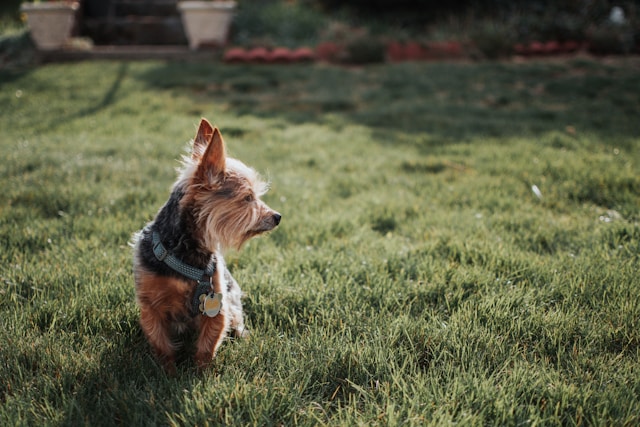
Image Credit: Brown and black yorkshire terrier on green grass field during daytime by Kaylin Pacheco, licensed by Unsplash License

